
Fast Relief From a Painful, Swollen Toe
An ingrown toenail can turn every step into a sharp, throbbing reminder that something is wrong. At Henderson Podiatry, our podiatrists treat ingrown toenails every week at our Lancaster office on Millersville Road and our Willow Street office on Beaver Valley Pike. Most patients feel better the same day, and chronic cases can be corrected so the nail stops growing back into the skin.
request an appointmentWhat Is an Ingrown Toenail?
An ingrown toenail happens when the corner or side edge of the nail curves down and grows into the soft skin next to it. It most often affects the big toe. At first the skin may just feel tender. As the nail keeps pressing in, the area can become red, swollen and infected.
Common Causes
- Cutting toenails too short or rounding the corners
- Shoes or socks that squeeze the toes
- Fungal infections that thicken or change the shape of the nail
- Injury, such as stubbing the toe or dropping something on it
- Naturally curved or fan-shaped nails that run in families
- Repeated pressure from running, soccer, dance and other sports
Signs You May Have an Ingrown Toenail
- Pain or tenderness along one or both sides of the nail
- Redness and swelling around the nail edge
- Pain that gets worse in shoes or when the toe is pressed
- Drainage, pus or a bad smell, which point to infection
- Extra tissue growing over the nail border
How We Treat Ingrown Toenails
Treatment depends on whether the problem is new or keeps coming back.
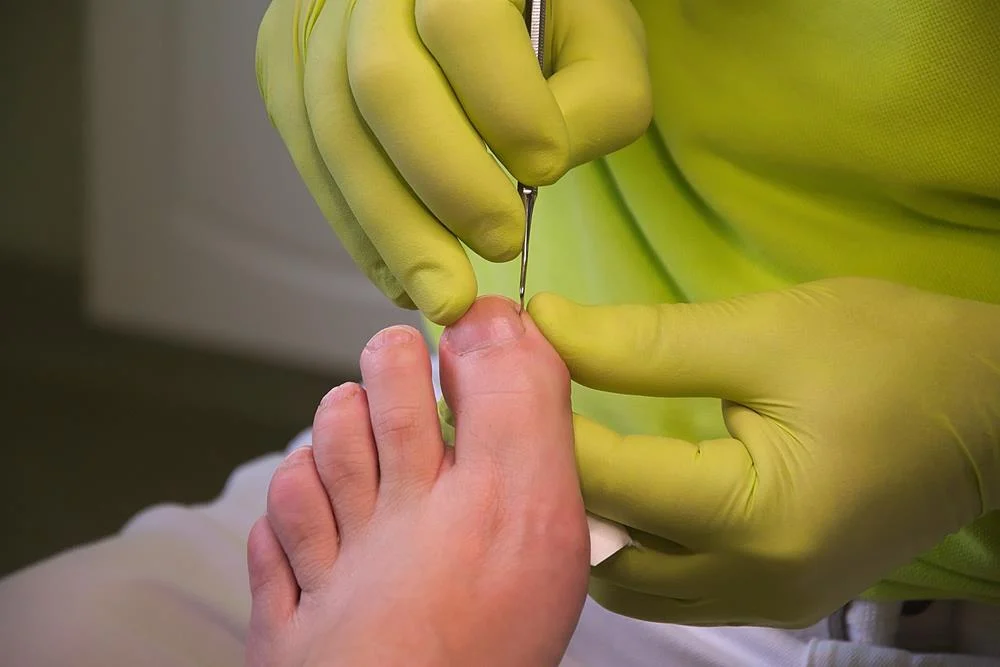
Acute ingrown toenails: When a nail has just started to dig in or has become infected, our podiatrist numbs the toe and gently removes the piece of nail pressing into the skin. If an infection is present, antibiotics may be prescribed. This brings quick relief, and most patients walk out in regular shoes or sandals.
Chronic ingrown toenails: If the same nail keeps becoming ingrown, permanent removal of the problem border is an option. After the edge of the nail is removed, the nail root along that side is treated so it will not grow back. The rest of the nail stays in place and looks narrower but natural. This simple in-office procedure ends the cycle of repeat infections for most patients.
Who Should Not Treat It at Home
Soaking and loose shoes can help a mild case, but “bathroom surgery” with clippers or tweezers often makes the problem worse and can cause infection. People with diabetes, poor circulation or numbness in the feet should always have an ingrown toenail treated by a podiatrist. Learn more about our diabetic foot care services.
Preventing Ingrown Toenails
- Trim nails straight across and leave them even with the tip of the toe
- Wear shoes and socks with plenty of room for your toes
- Protect your feet at work and during sports
- Have thick or discolored nails checked, since fungus can change nail shape
Ingrown toenails are just one of the many skin and nail problems our team treats for patients across Lancaster County.
Ingrown Toenail Questions
Does ingrown toenail treatment hurt?
The toe is numbed with a local anesthetic before any nail is removed, so you should feel pressure but not pain during the procedure. The injection itself stings briefly. Most patients say the toe feels better right away because the nail is no longer pressing into the skin.
How long does it take to heal?
After a partial nail removal, most people return to normal daily activities within a day or two. The skin along the nail border usually heals in about two to four weeks. We give you simple aftercare steps to keep the area clean while it heals.
Will my ingrown toenail come back?
A temporary removal fixes the current problem, but the nail can grow back into the skin, especially if you have curved nails. If you have had repeat ingrown toenails, permanent removal of the offending nail border keeps that edge from growing back.
When should I see a podiatrist for an ingrown toenail?
Make an appointment if the toe is red, swollen, draining or very painful, or if the problem lasts more than a few days. People with diabetes, poor circulation or nerve damage should be seen right away, even for a mild case.
Can I treat an ingrown toenail myself?
Warm soaks and roomy shoes may ease a very mild case. Cutting into the corner of the nail at home often leaves a sharp spike that digs in deeper and can lead to infection. A podiatrist can remove the problem piece safely and cleanly.
Do children get ingrown toenails?
Yes. Ingrown toenails are common in children and teens, especially young athletes and kids who outgrow their shoes quickly. We treat patients of all ages with the same gentle in-office approach.
Which office can I visit for ingrown toenail care?
Both of our offices treat ingrown toenails. You can book at our Lancaster office at 882 Millersville Road, (717) 291-0391, or our Willow Street office at 324 Beaver Valley Pike, (717) 464-5603, whichever is more convenient for you.
Stop Living With a Painful Toe
You do not have to wait for an ingrown toenail to get worse. Our podiatrists can usually relieve the pain in a single visit and offer a lasting fix if the problem keeps coming back. Visit our Lancaster office or our Willow Street office, or call to schedule.