
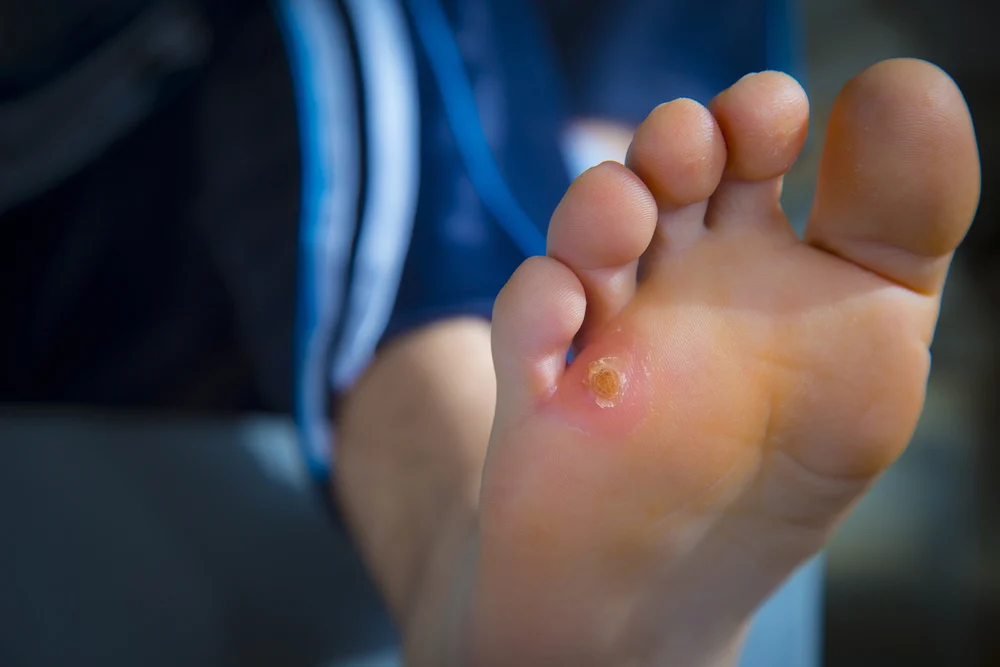
Helping Slow-Healing Foot Wounds Close Safely
A foot ulcer may not hurt, but it is still a serious problem that needs medical attention. Drainage, red or swollen tissue, or a sore that will not heal can signal a wound that is getting worse. At Henderson Podiatry, our podiatrists treat foot ulcers and chronic wounds at both of our offices, in Lancaster and Willow Street, PA. We find out why the wound is not healing, protect it from infection and build a care plan that helps it close.
request an appointmentWhy Foot Wounds Need Prompt Attention
Your feet carry your full body weight all day. They also sit farthest from your heart, so blood flow and healing can be slower there than anywhere else. A small blister, cut or pressure spot can turn into an open ulcer, especially for people with diabetes, poor circulation or reduced feeling in their feet. Without treatment, a foot wound can become infected and reach the deeper tissue or bone. In serious cases, it can lead to hospitalization or amputation.
Many patients do not notice a wound until it has been there for a while. Nerve damage, called neuropathy, can take away the pain that would normally warn you. That is why we encourage anyone at higher risk to check their feet every day and to call us as soon as something looks wrong.
Types of Foot Wounds We Treat
- Diabetic foot ulcers: open sores, often on the bottom of the foot or the toes, caused by neuropathy, pressure and slow healing.
- Pressure ulcers: wounds caused by constant rubbing or pressure from shoes, foot deformities or long periods of sitting or lying down.
- Venous and arterial ulcers: sores linked to poor blood flow in the legs and feet, often near the ankle.
- Traumatic wounds: cuts, punctures and blisters that are slow to heal or show signs of infection.
- Post-surgical wounds: incisions that need close monitoring and follow-up care.
Warning Signs to Watch For
- Drainage or fluid on your socks or shoes
- Red, warm or swollen skin around a sore
- A bad odor coming from the foot
- Black or discolored tissue around the wound
- A sore that has not improved within a few days
- Fever or chills along with a foot wound
How We Evaluate a Foot Wound
Good wound care starts with finding out why the wound formed and what is keeping it from healing. Your podiatrist will look at the size, depth and condition of the wound and check the circulation and feeling in your feet. We will also review your health history. X-rays may be ordered to look for infection in the bone or a structural problem that is putting pressure on the area. If infection is a concern, we may also take a sample from the wound.
Treatment for Foot Ulcers and Chronic Wounds
Each care plan is built around the wound and the person. Treatment may include:
- Debridement: careful removal of dead or unhealthy tissue so healthy tissue can grow.
- Wound dressings: dressings that keep the wound clean and protected and hold the right amount of moisture.
- Offloading: padding, special shoes, boots or braces that take pressure off the wound while it heals.
- Infection management: antibiotics and close monitoring when infection is present.
- Regular follow-up visits: scheduled checks so we can track healing and adjust care as needed.
Once the wound has closed, we focus on keeping it from coming back. That may mean custom orthotics, properly fitted diabetic footwear or treatment for a bunion, hammertoe or other deformity that caused the pressure in the first place.
Ongoing Care for High-Risk Feet
Wound care is closely tied to diabetic foot care and routine care for older adults. Regular podiatry visits let us catch calluses, nail problems and skin breakdown early, before they become open wounds. Patients with diabetes, neuropathy, circulation problems or a past ulcer benefit most from routine foot exams.
Two Convenient Offices
Patients can be seen at either of our offices. Our Lancaster office is at 882 Millersville Road and can be reached at (717) 291-0391. Our Willow Street office is at 324 Beaver Valley Pike and can be reached at (717) 464-5603. Choose whichever location is more convenient for you.
Foot Wound Care FAQs
When should I see a podiatrist for a foot wound?
See a podiatrist if a sore on your foot has not improved within a few days, or if it is draining, red, swollen, warm or smells bad. If you have diabetes or poor circulation, call us right away for any break in the skin, even a small one.
Why don’t some foot ulcers hurt?
Many people with diabetes develop neuropathy, a type of nerve damage that reduces feeling in the feet. Without pain as a warning, an ulcer can grow or become infected before it is noticed. That is why daily foot checks are so important.
What happens during a wound care visit?
Your podiatrist will examine the wound, check the circulation and feeling in your foot and review your health history. Treatment may include cleaning and removing unhealthy tissue, applying a dressing and taking pressure off the area. We may also order X-rays or test the wound for infection.
How long does it take a foot ulcer to heal?
Healing time depends on the size and depth of the wound, your blood flow, your blood sugar control and how well pressure is kept off the area. Some wounds heal in a few weeks, while others take longer. Regular follow-up visits help keep healing on track.
Why do I need to keep weight off the wound?
Pressure from standing and walking can keep a wound from closing and can make it larger. Offloading with padding, a special shoe, boot or brace lets healthy tissue form so the wound can heal.
Can foot ulcers come back after they heal?
Yes, ulcers can return, especially when the cause has not been addressed. Custom orthotics, proper diabetic footwear, routine foot exams and treatment of deformities such as bunions or hammertoes all help lower the risk.
Which office can I visit for wound care?
Wound care is available at both of our offices: 882 Millersville Road in Lancaster, (717) 291-0391, and 324 Beaver Valley Pike in Willow Street, (717) 464-5603. You can schedule at whichever location works best for you.
Don’t Wait on a Wound That Won’t Heal
Early care makes healing easier and lowers the risk of serious complications. Contact Henderson Podiatry to schedule a wound evaluation at our Lancaster or Willow Street office. Have more questions first? Visit our frequently asked questions.